Unlocking Alternative Yields: Land Entitlement and Asset Strategies for DFW Outdoor Hospitality and RV Living
Introduction: The Evolution of Alternative Real Estate
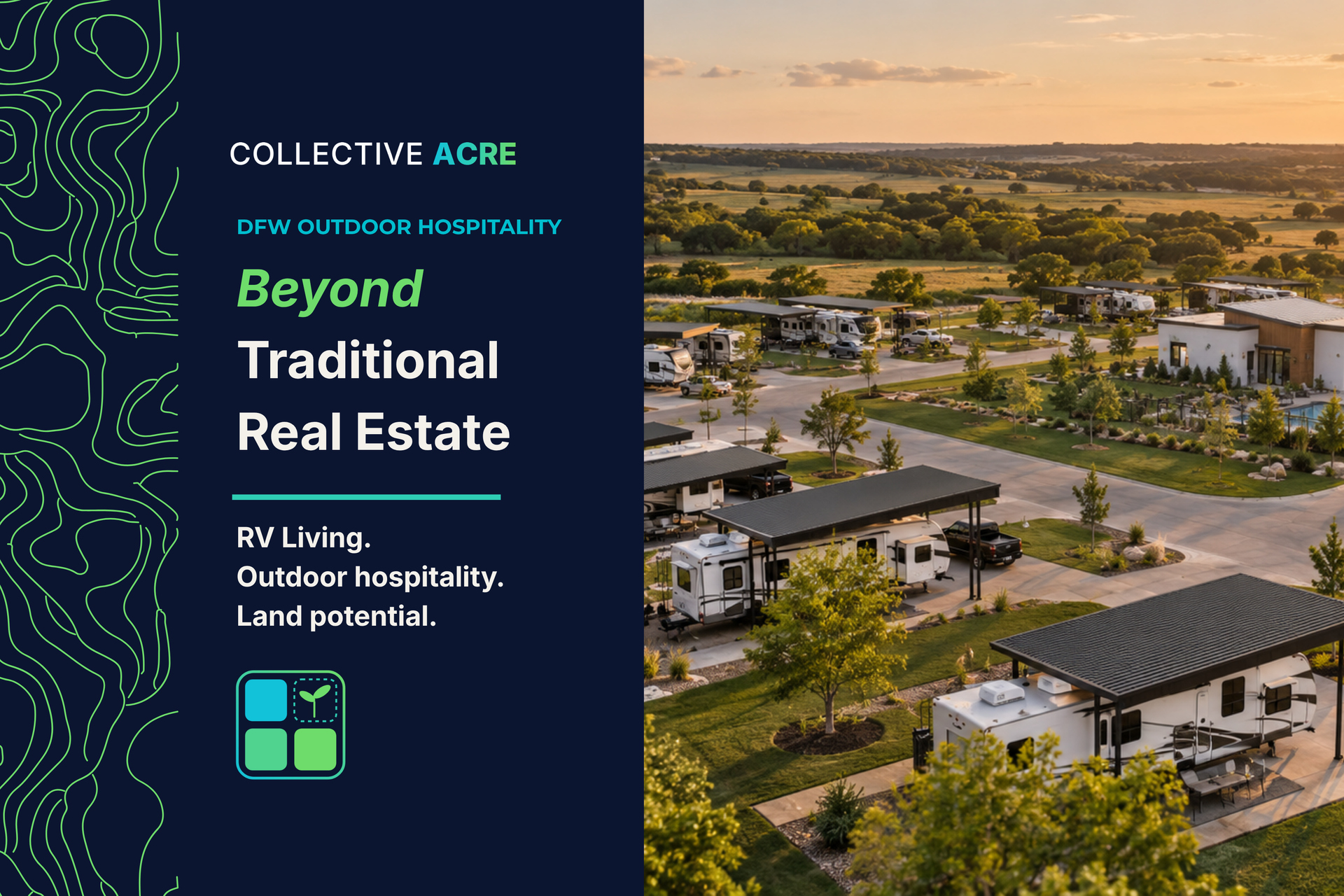
As traditional residential and commercial corridors across the Dallas-Fort Worth metroplex densify, institutional investors and sophisticated developers are looking past conventional asset classes. Driven by demographic migration and shifting lifestyle preferences, alternative real estate—specifically upscale RV resorts, master-planned outdoor hospitality spaces, and transitional acreage—has emerged as a high-yield frontier.
However, capturing these returns requires a specialized approach. Converting raw or underutilized land into a compliant, institutional-grade alternative asset involves navigating a complex web of municipal codes, civil engineering hurdles, and strict entitlement frameworks. At Collective Acre, we bridge the gap between raw land potential and institutional operational execution.
The Regulatory Landscape of Alternative Asset Classes
Developing an alternative land asset in high-growth submarkets around Fort Worth and Haslet is vastly different from standard subdivision development. Municipalities frequently evaluate outdoor hospitality projects through rigid regulatory lenses, often utilizing outdated zoning definitions that fail to accommodate modern, high-end RV resort concepts.
Navigating these challenges requires mastery of local Unified Development Codes (UDC). Developers must carefully manage:
- Zoning Classifications: Securing specific-use permits (SUPs) or zoning changes where alternative uses are not explicitly permitted by right.
- Occupancy Distinctions: Legally establishing the operational boundaries between short-term transient hospitality and long-term residential living to comply with county and city housing codes.
Capital Engineering and Technical Due Diligence
The valuation of an alternative land asset rests entirely on its back-end infrastructure. Without exhaustive technical due diligence, raw acreage can quickly become a capital trap.
Key engineering requirements include:
- Utility & Wastewater Capacity: Designing high-capacity septic or municipal tap systems capable of handling continuous, multi-pad blackwater and graywater loads.
- Hydrological and Environmental Reviews: Managing complex stormwater retention, floodplain mitigations, and environmental impact assessments across large parcels.
- Ingress/Egress Engineering: Ensuring internal roadways meet county and emergency vehicle turning radii requirements for oversized transit.
Operational Depth as a Competitive Advantage
Regulatory approval is only the first phase of an alternative asset's lifecycle. Long-term asset performance relies heavily on hands-on operational depth. Managing utility maintenance, guest compliance, dynamic pricing structures, and ongoing municipal relations requires institutional-grade oversight.
Investors who treat alternative land projects as passive land holds routinely face costly compliance friction. Conversely, those who implement rigorous asset management frameworks unlock exceptional risk-adjusted yields.
Conclusion: Partnering with Collective Acre
Alternative real estate asset classes represent an incredible growth avenue within the North Texas market, provided they are backed by rigorous site selection, precise capital engineering, and deep regional insight.
Whether you are evaluating transitional land assemblages or structuring an alternative hospitality project, Collective Acre delivers end-to-end capabilities tailored to maximize your portfolio's performance.
Explore our core services and asset management strategies by visiting us at www.collectiveacre.com.